
Have you ever logged into PayPal and suddenly seen a notification asking for a tax form? Relax, you’re not alone.
For many online sellers, freelancers, creators, and international founders, this moment triggers the same reaction:
“Wait… which form am I supposed to submit?”
We totally get it! One minute you’re running your business. The next, PayPal is asking you to submit a form you’ve perhaps never heard of: W-9 vs W-8BEN vs W-8BEN-E, and somehow, choosing the wrong one can affect your payouts.
The problem is, most users don’t know the difference, and the stakes are higher than they look.
The wrong form can lead to backup withholding, payment holds, IRS reporting errors, or account restrictions that show up when you least expect them.
This guide walks you through exactly which PayPal tax form you need, and why, based on your tax status and business structure.
And if you’re building or scaling a global business, we’ll also show how doola helps founders stay compliant across PayPal, the IRS, and beyond, without getting buried in paperwork.
Why PayPal Requires Tax Forms in the First Place
PayPal isn’t asking for tax forms just to be annoying. They’re doing it because they’re legally required to comply with US tax regulations.
PayPal’s Obligation Under US Tax Law
PayPal is classified as a payment settlement entity, meaning it must follow IRS rules related to reporting income earned through its platform.
That includes collecting taxpayer information from users and issuing income reports when required.
IRS Income Reporting Requirements (1099 Forms)
If you are a US person earning income through PayPal, PayPal may be required to report your transactions to the IRS using forms like: Form 1099-K
To do that properly, PayPal needs your correct tax classification first.
Why This Applies to Both US and Non-US Users
Even if you live outside the United States, PayPal is still a US-regulated payment platform, which means it must follow strict IRS compliance and financial reporting rules.
So, these tax form requirements don’t just apply to Americans, they apply to anyone using PayPal to receive business-related payments.
Whether you’re a freelancer in California, an e-commerce seller in India, or a digital entrepreneur in Brazil, PayPal needs to clearly understand who you are from a tax perspective before it can process payments without restrictions.
| ✔️ For US-based individuals and businesses
PayPal collects Form W-9 to obtain your Taxpayer Identification Number (TIN) and ensure your income is properly reported to the IRS through forms like the 1099-K. ✔️ For non-US residents and foreign businesses PayPal requires W-8 forms (either W-8BEN or W-8BEN-E) to document your non-US status. These forms help PayPal confirm that you are not a US taxpayer and may also allow you to reduce or avoid automatic withholding on certain US-sourced payments, depending on tax treaty rules. |
Without the correct tax form on file, PayPal may be forced to take compliance actions such as:
- Placing holds or limitations on your account
- Applying backup withholding at rates of up to 30% on incoming payments
- Reporting your income incorrectly (or flagging it for review) with tax authorities
- Suspending certain account features until proper documentation is provided
At its core, PayPal must determine whether you are:
1. A US taxpayer, meaning your transactions may need to be reported directly to the IRS under US income reporting rules.
2. A non-US individual, where PayPal must confirm you are a foreign person and not subject to the same domestic tax reporting requirements.
3. A foreign business entity, such as an overseas corporation or partnership, which requires additional classification and documentation under international tax compliance standards
That’s exactly where W-9, W-8BEN, and W-8BEN-E forms play an integral role.
These forms act as PayPal’s way of officially categorizing your account for tax purposes, so it knows whether to issue IRS reporting forms, whether withholding applies, and how to treat your payments under US regulations.
Quick Answer: Which PayPal Tax Form Do You Need?
If PayPal is asking you for a tax form, it’s trying to answer one very specific question:
How should your account be classified for US tax and reporting purposes?
There’s a simple decision framework that applies to almost everyone. Ask yourself just two things:
- Are you a US person or a non-US person for tax purposes?
- Are you operating as an individual or through a registered business entity?
Your answers to these two questions determine which PayPal tax form you need.
PayPal Tax Forms: W9 vs. W-8BEN vs. W-8BEN-E
✔️ W-9 tells PayPal: “I’m a US taxpayer, report my income accordingly.” ✔️ W-8BEN tells PayPal: “I’m a foreign individual, don’t treat me like a US taxpayer.” ✔️ W-8BEN-E tells PayPal: “I’m a foreign business, apply entity-level tax rules, not individual ones.”
Your Status
Your Profile
Correct Form
US citizen or resident
Individual or US-registered business
Form W-9
Non-US person
Individual seller / freelancer / creator
Form W-8BEN
Non-US company/entity
Foreign corporation or partnership
Form W-8BEN-E
Let’s put it this way:
If you’re still unsure which bucket you fall into, don’t stress. In the later sections, we break down each form in detail: who it is for, when PayPal requires it, and what happens if you get it wrong.
What Is Form W-9 and When PayPal Requires It
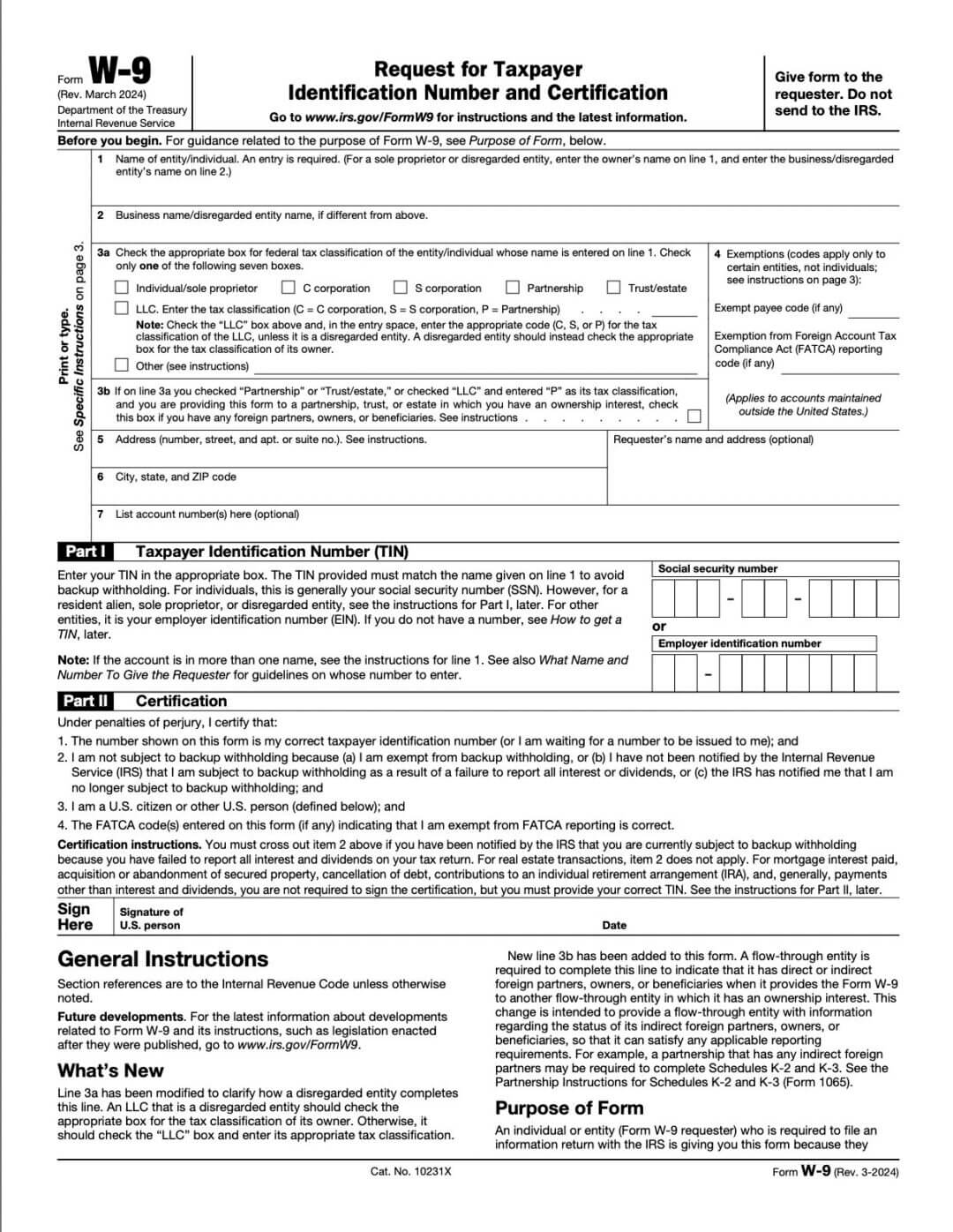
Form W-9 is an IRS form used to collect taxpayer information from US individuals and businesses. When PayPal asks you to submit a W-9, it’s essentially confirming one thing:
You are a US taxpayer, and your PayPal income may need to be reported to the IRS.
This form allows PayPal to verify your identity for tax purposes, collect the correct Taxpayer Identification Number (TIN), and meet its legal reporting obligations under US tax law.
Let’s break down exactly who needs it, when PayPal requests it, and what mistakes to avoid.
Who Qualifies as a US Person or US Business?
PayPal requires Form W-9 if you are considered a US person under IRS rules. This typically includes:
- US citizens, even if you live abroad but remain a US taxpayer
- Green card holders, since lawful permanent residents are treated as US persons for tax reporting
- US residents for tax purposes, based on IRS residency tests (not just where you currently live)
- US-registered businesses, such as LLCs, corporations, or partnerships formed in the United States
In short, if your PayPal account is tied to a US taxpayer identity, PayPal will expect a W-9.
When PayPal Requests a W-9
PayPal typically asks for a W-9 when certain compliance or reporting triggers occur, such as:
- Your account is identified as US-based, through your address, bank details, or account setup.
- You cross certain transaction thresholds, which may require PayPal to begin formal IRS reporting.
- You’re receiving payments for goods or services, especially through business or commercial transactions.
- Your taxpayer status needs verification, to prevent incorrect withholding or reporting errors.
This is PayPal’s way of ensuring your account remains compliant before issuing tax documents like a 1099.
How PayPal Uses W-9 for IRS Reporting
Once you submit Form W-9, PayPal uses it to support accurate tax reporting and avoid compliance issues.
Specifically, PayPal uses the W-9 to:
- Confirm your Taxpayer Identification Number (TIN), such as your SSN or EIN
- Issue Form 1099-K when required, reporting qualifying payment activity to the IRS
- Ensure your income is properly linked to your tax profile, reducing the risk of backup withholding or mismatched reporting
Put simply, the W-9 helps PayPal connect your payment activity to the correct US taxpayer record.
Common W-9 Mistakes Made by PayPal Users
Small mistakes on a W-9 can lead to big disruptions like withheld payments, compliance flags, or account limitations.
Let’s take a look at the most common errors PayPal users make, along with their impact and the right solution:
| Mistake | Impact on Your PayPal Account | Solution |
| Entering the wrong SSN or EIN | IRS mismatch may trigger backup withholding or delayed reporting. | Double-check your taxpayer ID before submitting. |
| Submitting a W-9 even though you’re not a US taxpayer | Incorrect classification can lead to compliance issues or wrong reporting. | Non-US users should typically submit a W-8 form instead. |
| Using personal information when operating under a business entity | Income may be reported under the wrong name or tax profile. | Submit the form using the correct business legal name and EIN |
| Forgetting to update after forming an LLC or corporation | PayPal records may become outdated, causing verification problems | Update your tax form immediately after structural changes |
Submitting the right W-9 ensures PayPal can report your income correctly, keep your account in good standing, and prevent unnecessary withholding.
And if your business structure changes, especially as an international founder forming a US company, it becomes even more important to get this step right.
What Is Form W-8BEN and Who Should Use It
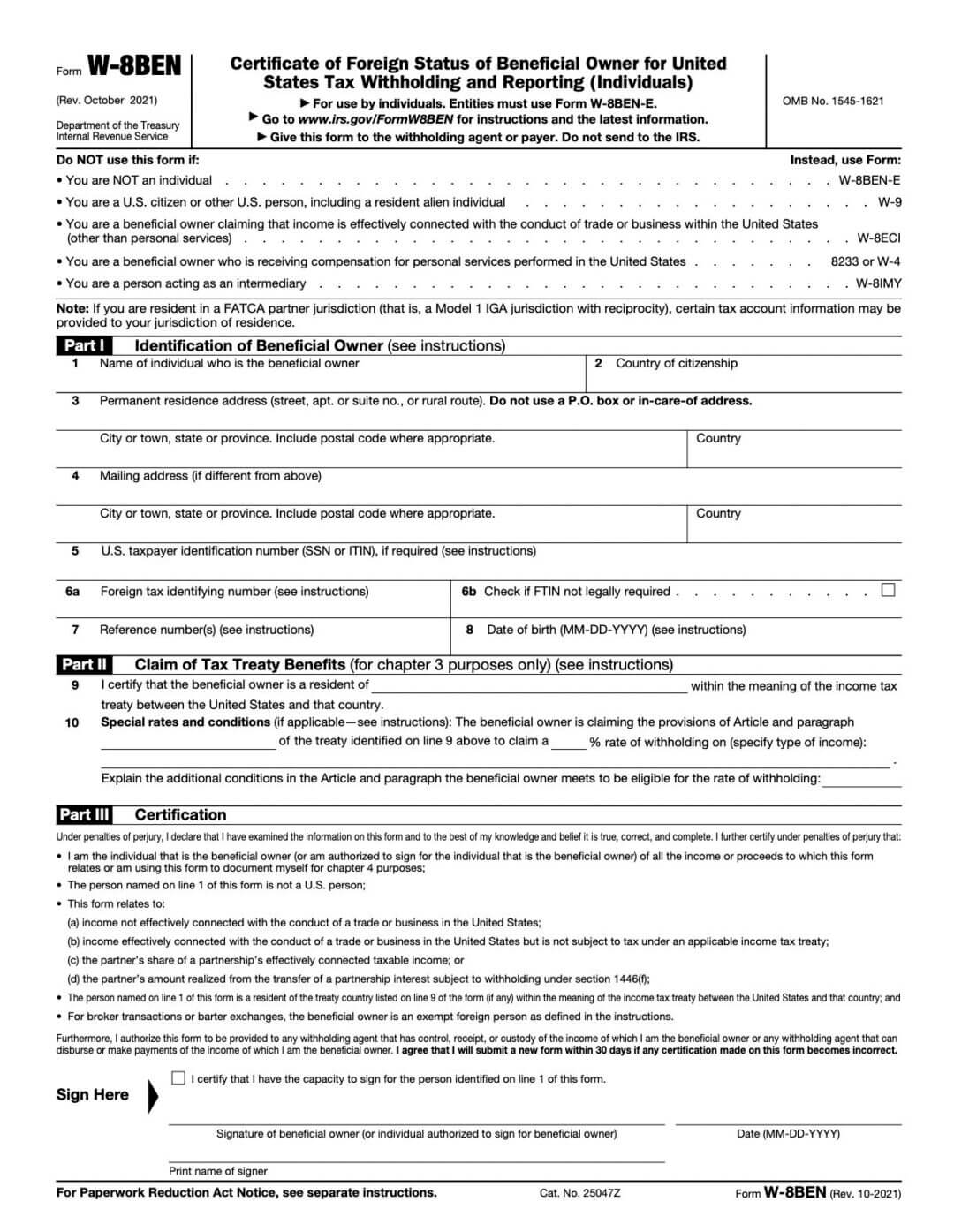
Form W-8BEN (Certificate of Foreign Status of Beneficial Owner) is an official IRS document used by non-US individuals who earn income through US-based platforms like PayPal. Its primary purpose is simple but critical:
It tells PayPal and the IRS that you are a foreign individual, not a US taxpayer, and that different tax rules may apply to your payments.
PayPal uses this form to correctly classify your account, determine whether any withholding is required, and ensure your international income isn’t mistakenly treated as US domestic income.
Let’s look at exactly who needs it and why it matters.
Who Qualifies as a Non-US Individual?
Form W-8BEN is designed specifically for individuals who are not considered US persons for tax purposes. This includes:
- Non-US citizens, meaning you do not hold US citizenship or permanent residency
- International freelancers, such as consultants, designers, writers, or developers providing services globally while residing outside the US
- Foreign creators and e-commerce sellers, including YouTubers, digital product sellers, or Shopify store owners operating from abroad
- Individuals earning income through US platforms, where payments are processed by US-regulated companies like PayPal, Stripe, or Amazon
So, if you live outside the US, are earning money through PayPal, and you’re operating as an individual (not under a registered company), W-8BEN is the correct form.
Why PayPal Requires W-8BEN
PayPal requests Form W-8BEN because it needs to properly document your foreign status under US compliance rules.
Specifically, PayPal uses W-8BEN to confirm:
- You are not subject to US tax reporting as a US person, meaning PayPal should not treat you like a domestic taxpayer filing a W-9
- Whether withholding applies to your payments, especially if any part of your income is considered US-sourced under IRS rules
- Your eligibility for tax treaty benefits, which can significantly reduce or eliminate withholding depending on your country of residence
In short, W-8BEN helps PayPal apply the right tax treatment to your account and avoid unnecessary compliance restrictions.
Withholding Risks If W-8BEN Is Not Submitted
If you don’t submit Form W-8BEN when PayPal requests it, PayPal may be legally required to apply withholding on certain payments connected to US sources.
For example, let’s say you’re a freelancer in India earning $5,000 from US-based clients through PayPal. If PayPal does not have a valid W-8BEN on file, it may apply withholding of up to ~30%.
That basically means:
| You earn: $5,000 | PayPal withholds: $1,500 | You actually receive: $3,500 |
That missing $1,500 isn’t a random fee; it’s money withheld for tax compliance purposes, and recovering it later can be complicated.
Submitting the correct W-8BEN upfront helps prevent this type of automatic withholding and keeps your payouts uninterrupted.
How Tax Treaties Affect PayPal Reporting
One of the biggest (and most overlooked) advantages of submitting Form W-8BEN is the ability to claim benefits under US tax treaties.
These treaties are agreements between the United States and other countries that determine how income earned across borders should be taxed, and in many cases, they significantly reduce or eliminate automatic withholding.
Without a valid W-8BEN on file, PayPal has no choice but to assume the highest default withholding rate, up to 30%, on certain US-source payments.
With the form in place, PayPal can apply treaty benefits correctly and treat your income according to your country’s agreement with the US.
Here’s how tax treaties with some major countries typically affect PayPal reporting and withholding for foreign individuals:
| Country | US Tax Treaty? | Impact on Withholding | What This Means for PayPal Reporting |
| India | ✅ | Withholding may be reduced or eliminated for certain service income. | W-8BEN allows PayPal to confirm treaty eligibility and avoid default withholding |
| Canada | ✅ | Often reduced to a lower rate, depending on the type of income. | PayPal can apply treaty rates instead of the standard 30% |
| UK | ✅ | Many income categories qualify for reduced or zero withholding. | Correct W-8BEN prevents over-withholding on UK-based sellers. |
| Australia | ✅ | Reduced withholding applies in many cases. | PayPal uses W-8BEN to classify income under treaty rules. |
| Germany | ✅ | Treaty provisions often lower withholding obligations. | Accurate documentation always ensures compliant cross-border reporting. |
| France | ✅ | Reduced rates may apply depending on the income classification. | W-8BEN helps PayPal apply correct treatment instead of default rates. |
| Japan | ✅ | Certain income types may qualify for reduced or zero withholding. | Proper treaty claims help avoid unnecessary deductions. |
Depending on the treaty, the withholding rate could drop from 30% to a much lower percentage, or even 0% in some cases.
Submitting W-8BEN ensures PayPal has the documentation needed to apply those treaty benefits correctly, so you’re not overpaying taxes unnecessarily.
🔖 Related Read: Which Countries Can Fully Use PayPal in 2026?
What Is Form W-8BEN-E and When Businesses Need It
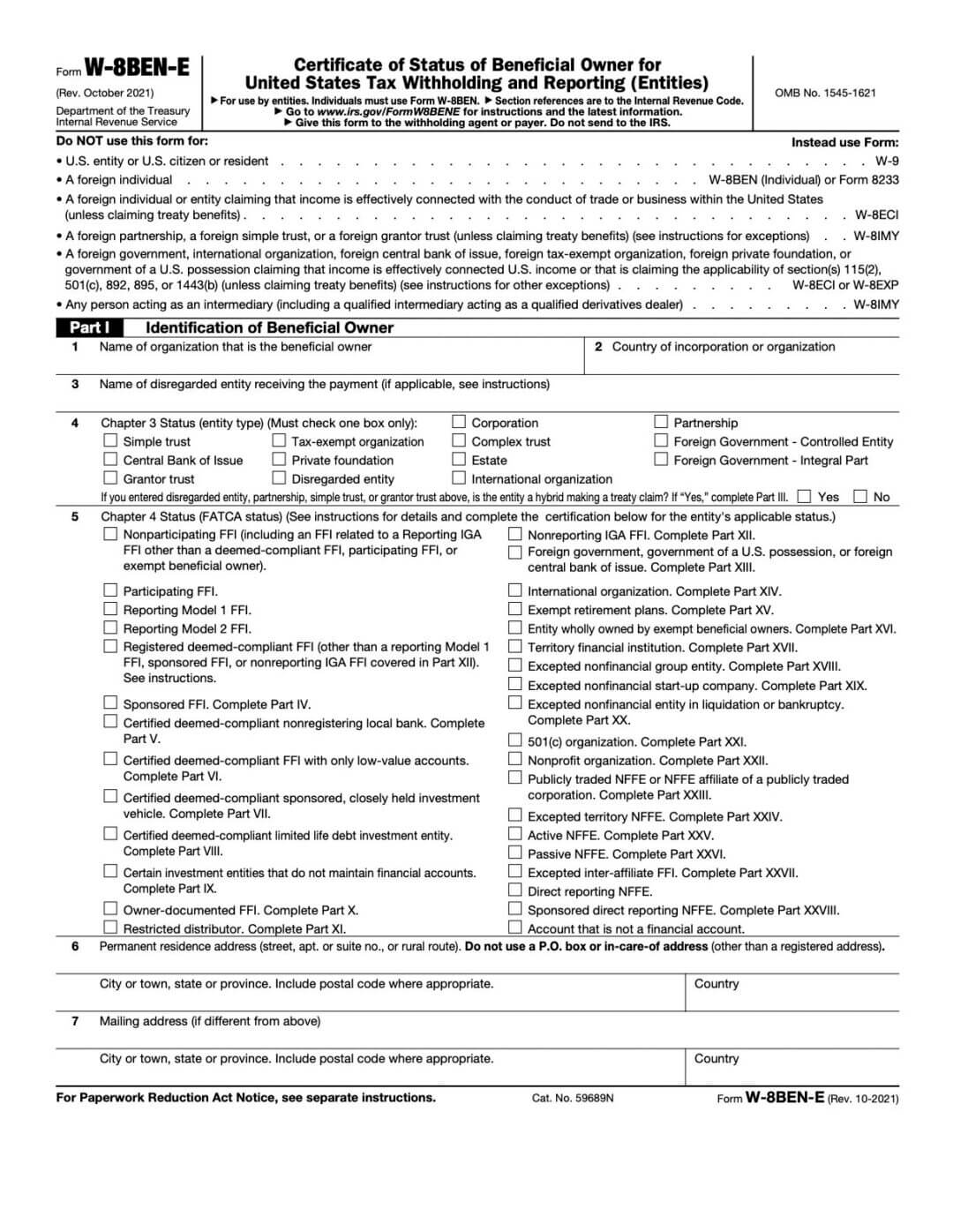
Form W-8BEN-E is the IRS document used by non-US businesses and entities to certify their foreign status when earning income through US-regulated platforms like PayPal.
In simple terms, W-8BEN-E communicates three key aspects to PayPal:
- Your business is not a US entity
- Your company should not be treated as a US taxpayer
- Specific withholding and reporting rules apply to you as a foreign business
This form becomes mandatory once you’re operating through PayPal as a non-US company, especially as your transaction volume or cross-border activity grows.
Who Qualifies as a Foreign Business or Entity?
Form W-8BEN-E is required for business entities that are legally formed outside the United States. This typically includes:
- Non-US corporations, such as companies incorporated in Canada, the UK, India, Australia, or the EU, even if they serve US customers
- Foreign partnerships, where the entity itself is registered outside the US, regardless of where individual partners reside
- International companies with PayPal business accounts, especially those receiving payments from US-based customers or platforms
If your PayPal account is set up under a company name, and that company is not US-incorporated, PayPal will almost always require W-8BEN-E.
W-8BEN vs W-8BEN-E: What’s the Difference?
This is one of the most common (and costly) areas of confusion for founders and finance teams.
Here’s a detailed breakdown:
| Feature | W-8BEN | W-8BEN-E |
| Who files it | Non-US individuals | Non-US businesses and entities |
| Applies to | Freelancers, creators, solo sellers | Corporations, partnerships, foreign companies |
| Legal status | Individual beneficial owner | Entity-level classification |
| Common PayPal use case | Personal PayPal account | PayPal Business account |
| IRS purpose | Certifies foreign individual status | Certifies foreign entity status and tax classification |
| Typical mistake | Used by companies incorrectly | Not filed when required by business accounts |
📌 In short: W-8BEN applies if you earn as a person and W-8BEN-E if you earn as a company.
Examples of Businesses That Must Submit W-8BEN-E
The requirement to file Form W-8BEN-E isn’t based on what you sell or where your customers live; it’s based on how your business is legally structured.
The examples below illustrate common business models where PayPal must collect W-8BEN-E to meet US tax and reporting obligations.
1. A Canadian Corporation Selling Online
Say a Canadian corporation selling digital products to US customers through PayPal generates $20,000 per month in revenue.
Because the business is a Canadian-incorporated entity, PayPal must document its foreign status using W-8BEN-E. Without it, PayPal may withhold up to 30%, meaning $6,000 per month could be held back unnecessarily.
2. A UK Ltd Company Receiving PayPal Payments
A UK Ltd agency, for example, receives £50,000 annually from US clients paying via PayPal.
In this case, even though services are delivered from the UK, PayPal still needs W-8BEN-E to classify the business correctly and apply any applicable UK–US tax treaty benefits.
3. An Indian Private Limited Company Exporting Services
Say for instance, an Indian Pvt Ltd software company earns $120,000 per year providing services to US startups.
Because it’s a registered Indian entity, PayPal requires W-8BEN-E to confirm that the income should not be treated as US domestic business income and to prevent unnecessary withholding on incoming payments.
4. A Foreign-Owned Entity With a PayPal Business Account
Let’s say a founder, Sam, operates a foreign-owned company and uses a PayPal Business account registered under the company’s legal name.
Even if Sam lives outside the US, PayPal evaluates the entity, not the individual. That means the correct form is W-8BEN-E, not W-8BEN.
If the wrong form is submitted, or no form is submitted at all, PayPal may restrict the account, delay withdrawals, or classify the income incorrectly for IRS reporting.
Why PayPal Scrutinizes Business Accounts More Closely
Compared to personal accounts, business accounts carry higher compliance risk, and PayPal knows it. Business accounts often involve:
- Higher transaction volumes, which increases regulatory exposure and reporting obligations
- Cross-border payments, where multiple tax jurisdictions and withholding rules may apply
- IRS compliance risk, especially when income flows through US-regulated platforms to foreign entities
Because of this, PayPal requires more detailed documentation to verify the legal existence of the business, confirm the correct tax classification, and ensure accurate reporting and withholding treatment
This additional scrutiny isn’t meant to slow you down; it’s designed to protect both PayPal and your business from costly compliance mistakes.
W-9 vs W-8BEN vs W-8BEN-E: Key Differences at a Glance
| Feature | W-9 | W-8BEN | W-8BEN-E |
| Who files it? | US individuals & businesses | Non-US individuals | Non-US entities/businesses |
| Residency | US taxpayer | Foreign person | Foreign entity |
| IRS Reporting Impact | PayPal may issue 1099-K | Confirms foreign status | Confirms foreign business status |
| Withholding Risk | Backup withholding if incorrect | Withholding if not filed | Withholding if not filed |
| What it means | “I’m a US taxpayer.” | “I’m a foreign individual.” | “I’m a foreign company.” |
Common PayPal Tax Form Mistakes (and How to Avoid Them)
Most tax issues related to PayPal don’t happen because founders are doing something wrong; they happen because their tax forms no longer match how their business actually operates.
As your business evolves (new entity, new country, new structure), PayPal still relies on the tax information you originally submitted.
If those details aren’t updated, or if the wrong form is on file, PayPal’s compliance systems can step in to act automatically, often without much warning.
🔖 Related Read: PayPal Business Account Verification Failed! What Now?
Below are the most common PayPal tax form mistakes founders make, the real business impact of each, and exactly how to avoid them.
| Mistake | Business Impact | How to Avoid or Fix It |
| Filing the wrong form after US incorporation | PayPal may misclassify your business, apply withholding, or flag your account for review. | After forming a US LLC or corporation, update your PayPal tax profile. Most US entities must submit Form W-9, not a W-8. |
| Continuing to use W-8BEN after forming a US company | Income may be reported incorrectly, and compliance issues can arise with the IRS. | Once a US business exists, your personal foreign status no longer controls the PayPal account. |
| Using W-8BEN instead of W-8BEN-E for a company | PayPal may reject the form or restrict payments until the correct documentation is provided. | If the PayPal account is under a company name, submit W-8BEN-E, not W-8BEN. |
| Not updating the tax forms after residency changes | Your account may reflect outdated tax residency, triggering mismatches or withholding. | Update your PayPal tax form when you change your country of residence or tax status. |
| Not updating forms even after changing business structure | PayPal records often become inconsistent, leading to payment delays or account limits | Any change in entity type (sole proprietor → LLC, partnership → corporation) requires an updated form. |
| Ignoring changes in tax classification | IRS reporting errors and potential compliance flags | Review and update tax forms when your business elects new tax classification. |
| Leaving outdated form on file | Payment holds, backup withholding, and compliance reviews | Periodically review your PayPal tax profile to ensure it reflects your current setup. |
If your business has evolved, even slightly, and you’re not 100% sure your PayPal tax profile has kept up, you don’t have to figure it out alone.
doola’s team of tax professionals can walk you through the right forms, the right timing, and the right setup for your specific business.
Sign up and stay compliant year-round.
How doola Helps You Get PayPal Tax Compliance Right

At doola, we see founders struggling with PayPal tax compliance due to cross-border tax rules, confusing entity classifications, EIN and IRS documentation, or ongoing compliance obligations.
That’s where doola steps in, not just as a service provider or a “quick fix” to your tax issues, but as a long-term compliance partner.
Here’s what founders from 175+ countries love about doola:
🚀 US company formation in any state, done right from day one by trusted tax professionals
🚀 Hands-on support securing your EIN and tax setup, so platforms like PayPal have what they need
🚀 Clear guidance on choosing the correct PayPal tax form, based on your residency, entity type, and business goals
🚀 Ongoing compliance support as you scale, so growth never comes at the cost of IRS headaches
Whether you’re a freelancer working with global clients, an ecommerce seller collecting international payments, or a founder building a US business from abroad, doola helps you stay compliant and confidently focused on growth.
Ready to simplify PayPal tax compliance?
Sign up for our services and start your business journey with doola today.
FAQs

What happens if I submit the wrong tax form to PayPal?
Submitting wrong tax forms can create compliance issues for your account.
PayPal may reject the form, place temporary restrictions on your account, apply backup withholding to your payments, or report your income incorrectly to tax authorities.
In some cases, this can also delay payouts until the issue is resolved and the correct documentation is submitted.
Do I need to submit a PayPal tax form if I haven’t earned income yet?
Yes, in many cases. PayPal may still require a tax form for identity and compliance verification, especially for business accounts or newly created seller accounts.
Providing the form early helps prevent interruptions later when you start receiving payments.
Can I change my PayPal tax form later?
Yes. If your tax status changes, such as forming a company, changing residency, or updating your tax classification, you can submit a new or updated tax form through your PayPal account.
It’s important to update this promptly to avoid reporting errors or account limitations.
Does PayPal withhold taxes if I don’t submit W-8 forms?
Potentially, yes. If PayPal cannot confirm your foreign status through a valid W-8 form, it may be required to withhold taxes on certain US-source payments. This withholding can significantly reduce your payouts until the correct documentation is provided.
If I form a US LLC, do I still need a W-8BEN?
Usually no. Once you form a US LLC, the business is generally treated as a US entity for PayPal purposes, which means PayPal will typically require a Form W-9 instead of a W-8BEN.
The exact requirement can depend on your LLC’s tax classification, so it’s important to update your PayPal tax details accordingly.
How often do PayPal tax forms need to be renewed?
W-8 forms generally expire after a few years and must be renewed periodically to remain valid.
If a form expires, PayPal may request an updated version to keep your account compliant and avoid withholding or restrictions.
Will PayPal report my PayPal income to the IRS automatically?
For US taxpayers, yes.
If you meet the applicable reporting thresholds, PayPal may automatically report your income to the IRS by issuing forms such as the 1099-K. This is why having the correct tax form on file is essential for accurate reporting.
News
Berita Teknologi
Berita Olahraga
Sports news
sports
Motivation
football prediction
technology
Berita Technologi
Berita Terkini
Tempat Wisata
News Flash
Football
Gaming
Game News
Gamers
Jasa Artikel
Jasa Backlink
Agen234
Agen234
Agen234
Resep
Cek Ongkir Cargo
Download Film


