
For an international founder selling to a global audience, their payment platform determines how smoothly customers can pay them, how much they lose in fees, and how quickly they receive payment.
That’s where tools like Payoneer, PayPal, and Stripe come in handy. Each of them has different fees, availability, onboarding complexity, and methods for handling international transactions.
Payoneer is popular for cross-border payouts, PayPal is trusted almost everywhere, and Stripe powers some of the world’s biggest online businesses.
In this guide, we’ll break down Payoneer vs PayPal vs Stripe in a clear, side-by-side comparison so you can understand:
✔️ Which platform is the most affordable
✔️ Which one supports your country
✔️ Which one offers the best payout options
✔️ Which one is best for e-commerce, SaaS, freelancers, or marketplace sellers
✔️ And which one gives you the strongest long-term scalability
However, they work best when you have the proper business structure, such as a U.S. company, an EIN, and a US business bank account, so that you can use payment tools without roadblocks.
That’s why so many global founders partner with doola. doola helps entrepreneurs anywhere in the world form a U.S. LLC, get their EIN, and stay compliant.
Let’s start with a quick comparison table for instant clarity.
Payoneer vs PayPal vs Stripe: Comparison At a Glance
Feature
Payoneer
PayPal
Stripe
Availability
190+ countries
200+ countries
~40 countries for accounts; accepts payments globally
Fees
1%–3% transaction fees, currency conversion fees apply
3.49% + fixed fee; high FX fees
2.9% + 30¢ USD; add-ons for FX & international cards
Supported Currencies
Dozens of major global currencies
25+ currencies
135+ currencies
Payout Options
Global receiving accounts (USD, EUR, GBP), bank withdrawals, marketplace payouts
Bank transfers, PayPal balance, debit card instant withdrawals
Bank payouts to supported countries; multi-currency accounts with Stripe Treasury
Use Cases
Marketplaces, freelancers, cross-border payouts
Universal acceptance, e-commerce, digital goods
SaaS, startups, platforms, APIs, advanced integrations
Best For…
Marketplace sellers & global freelancers
Early-stage founders needing trust & easy onboarding
Scaling businesses, tech-savvy founders, subscription companies
🔖 Related Read: How to Accept International Payments from India: A Complete Guide for Entrepreneurs & Businesses
Payoneer: Best for Marketplace Sellers & Global Payouts
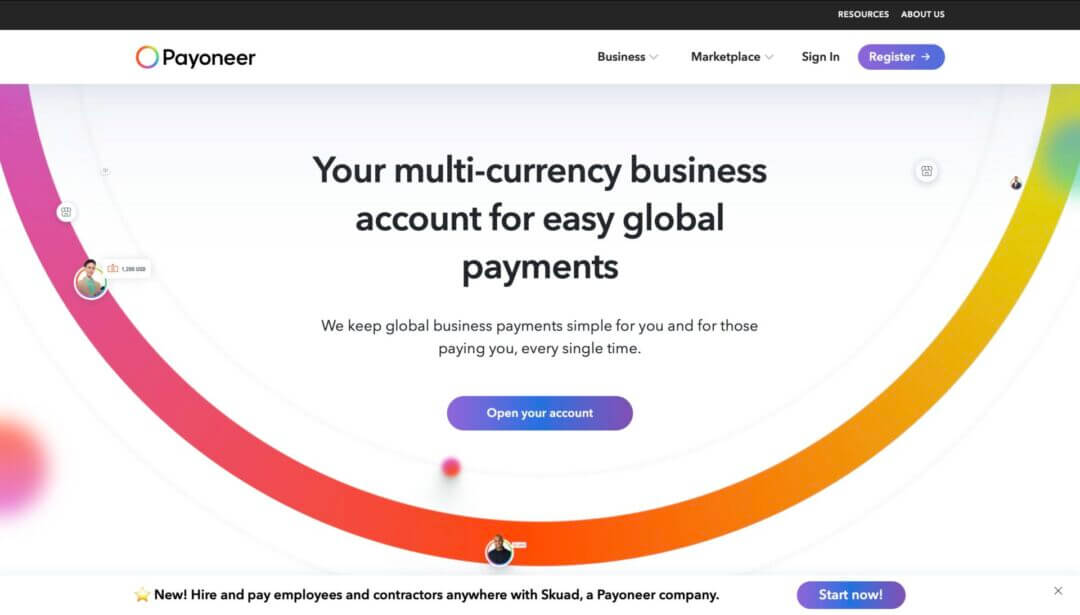
Platforms like Amazon, Upwork, Airbnb, and numerous global marketplaces utilize Payoneer for swift, borderless payouts.
That’s why it is a preferred choice among freelancers, e-commerce sellers, and international entrepreneurs.
What Payoneer Is Best For
Payoneer excels at helping users receive international payments in multiple currencies, often faster and cheaper than PayPal.
It’s especially popular among founders who sell on global marketplaces or work with international clients who prefer bank-to-bank transfers instead of card payments.
Payoneer is best for:
- Receiving payments from global marketplaces
- Getting multi-currency bank accounts (USD, EUR, GBP, etc.)
- Import/export businesses needing low-cost international transfers
- Freelancers working with international agencies
- Founders want simpler compliance and fewer account freezes compared to PayPal
Strengths
Payoneer offers several impressive benefits for international founders. These benefits make it one of the most reliable platforms for founders outside the U.S., Europe, and the UK.
- Multi-currency receiving accounts in USD, EUR, GBP, CAD, JPY, and more
- Lower fees compared to PayPal and traditional wire transfers
- Fast access to earnings from major marketplaces
- Better stability with fewer account holds or freezes
- Robust global availability in 190+ countries
- Business-friendly payouts, ideal for founders scaling internationally
Weaknesses
Payoneer is excellent for receiving international transfers, but not for processing a full e-commerce checkout. While Payoneer is powerful, it’s not perfect:
- Not ideal for credit card processing or checkout payments
- Fees can vary, making pricing sometimes confusing
- The approval process is stricter for some countries
- Less customer trust compared to PayPal for B2C purchases
- User interface is improving, but still not as seamless as Stripe
Payoneer Fees: Realistic Breakdown
For international founders, Payoneer typically offers the most transparent and affordable cross-border payout structure.
Its fees are generally lower than PayPal’s, but costs depend on how you receive and withdraw funds.
Here’s a realistic breakdown:
- Receiving payments from marketplaces: Usually free
- Receiving “Payment Request” transfers: 1%–3% depending on region
- Currency conversion: ~2%–2.5% above market rate
- Bank withdrawal (same currency): Free or low fee
- Bank withdrawal (different currency): FX fees apply
- Annual account fee: ~$29.95 (only if inactive)
Best Use Cases for International Founders
✔️ Amazon FBA and marketplace sellers needing fast payouts
✔️ Freelancers working with global clients or agencies
✔️ Service providers who receive large transfers in foreign currencies
✔️ Import/export businesses managing cross-border supplier payments
✔️ Founders without a US bank account who still want USD, EUR, or GBP receiving accounts
PayPal: Best for Universal Acceptance & Trust
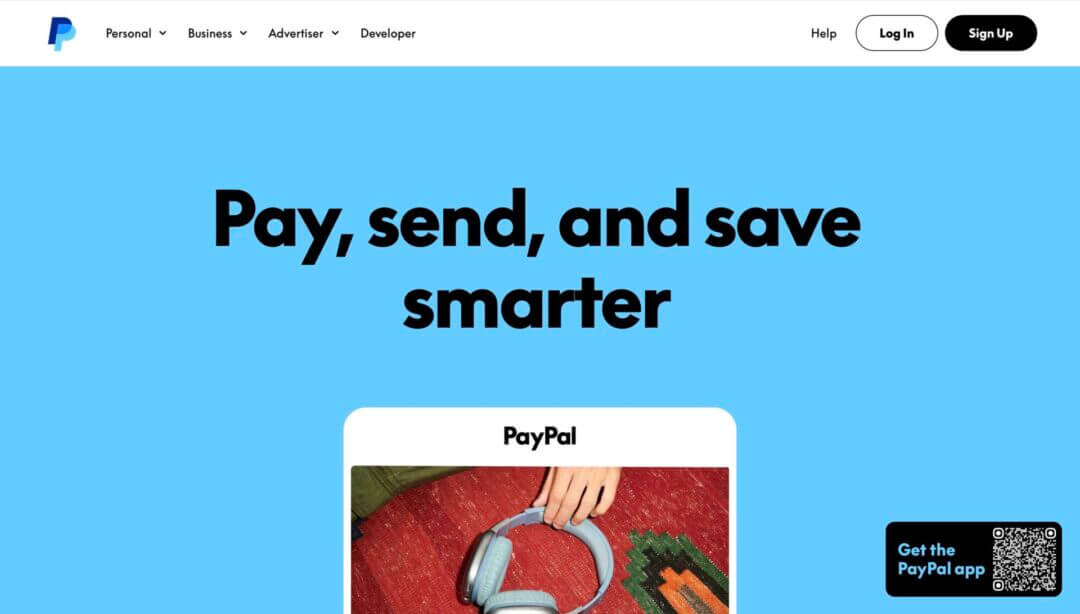
For many customers, especially in the U.S. and Europe, seeing the PayPal logo immediately builds trust.
That’s why millions of freelancers, e-commerce owners, and small businesses use it as their default payment gateway.
While PayPal isn’t the cheapest platform, its global brand recognition makes it almost impossible to ignore, especially if you sell directly to consumers.
What PayPal Is Best For
PayPal is ideal for founders who need a universal, plug-and-play payment processor with immediate customer trust.
If your buyers hesitate to enter their card details on your site, offering PayPal can often increase conversions instantly.
PayPal works best for:
- Selling digital or physical products online
- Accepting one-time payments from customers (globally)
- Freelancers invoicing international clients
- Businesses needing fast account setup
- Anyone who wants a simple, familiar payment option
Strengths
PayPal has several major advantages that set it apart:
- Worldwide brand reputation that boosts customer trust
- Seamless onboarding and accounts can be set up within minutes
- Works in 200+ countries, with one of the broadest coverages
- Instant withdrawal to PayPal balance
- Built-in dispute resolution
- Integrates with almost every website builder
Weaknesses
Even PayPal has its drawbacks, ones that international founders should be aware of. These issues are why many global founders seek PayPal alternatives.
Here are the most common PayPal cons:
- High fees, especially for international payments
- Aggressive account freezes if transactions seem suspicious
- Limited support and slow dispute resolution
- High currency conversion fees (often 3–4% above market rate)
- Long payout delays in some regions
PayPal Fees: Realistic Breakdown
While PayPal offers excellent customer confidence, it comes at a higher cost, making it better suited for low-volume or early-stage businesses, rather than high-volume scaling brands.
Here’s what international founders typically pay:
- Standard transaction fee (U.S.): 3.49% + fixed fee
- International payments: 4.4% + fixed fee
- Currency conversion: ~3%–4% above market exchange rate
- Chargeback fee: $20 per dispute
- Instant withdrawal to bank: Additional fee based on location
- PayPal business account: Free to open
Best Use Cases for International Founders
✔️ New businesses needing fast setup and global credibility
✔️ Freelancers who invoice U.S. and EU clients (PayPal is familiar and easy for clients)
✔️ Small e-commerce stores that want to increase checkout conversions
✔️ Businesses with low transaction volume where fees aren’t overwhelming
✔️ Founders who don’t yet have a U.S. entity but need to accept global payments immediately
Stripe: Best for Scaling Businesses & Tech-Savvy Founders
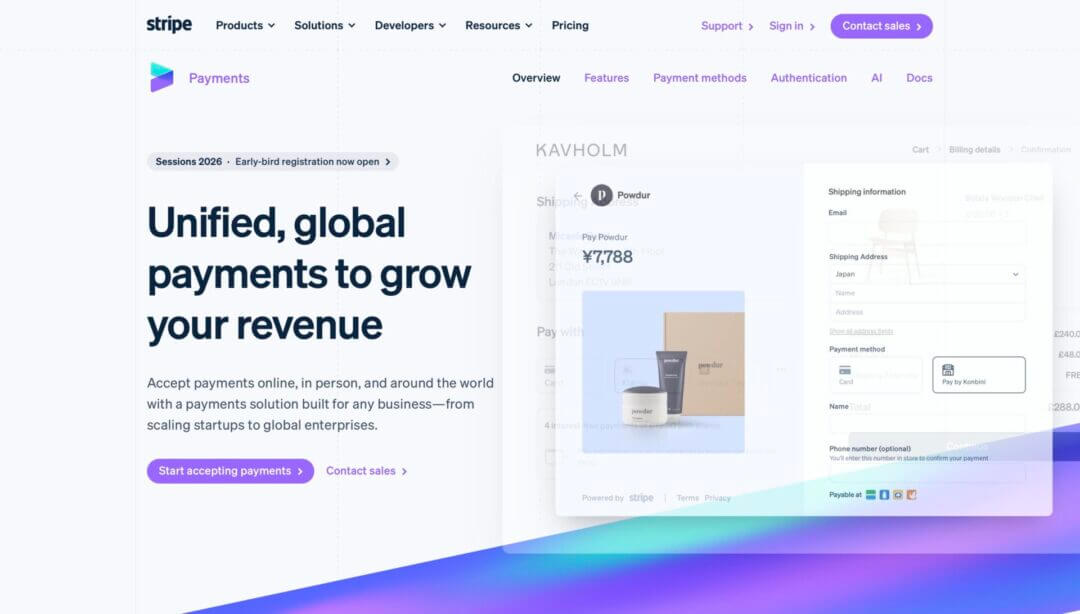
Stripe is the powerhouse of modern online payments and the platform behind some of the world’s fastest-growing companies.
What sets Stripe apart isn’t just its reliability, but its flexibility. Developers love its APIs, founders love its transparency, and scaling companies love how easily it adapts as they grow.
What Stripe Is Best For
Stripe is the strongest choice for businesses that need customization, automation, and scalability.
It outperforms both PayPal and Payoneer in terms of advanced setups and recurring billing.
Stripe is best for:
- SaaS companies offering monthly or yearly subscriptions
- E-commerce brands needing optimized checkout flows
- Online marketplaces or platforms
- Startups that want detailed analytics and customization
- Businesses scaling from hundreds to thousands of transactions per month
🔖 Related Read: Can’t Use Stripe? The Best Stripe Payment Processor Alternatives for International Startups in 2025
Strengths
Stripe’s ecosystem is its biggest advantage. For global payments and high-volume transactions, it provides unmatched flexibility.
Here’s what founders appreciate most:
- Supports 135+ currencies, ideal for global payments
- Advanced checkout customization to boost conversions
- Best subscription and recurring billing tools in the industry
- Powerful integrations with thousands of platforms and apps
- Clear, transparent fees compared to PayPal’s complex structure
- Reliable fraud prevention tools like Stripe Radar
- In-depth dashboards & analytics for growth tracking
Weaknesses
Stripe does have limitations, especially for beginners or international founders without U.S. business documentation.
- Requires a legally formed company in a supported country (like a U.S. LLC)
- No built-in customer wallet like PayPal
- More technical setup, which often requires developer support
- Account approval can be strict, especially for high-risk industries
- Funds may be held if your business model triggers risk flags
- Availability is limited to ~40 countries, far fewer than PayPal
Stripe Fees: Realistic Breakdown
Compared to PayPal, Stripe is generally more cost-effective for businesses that process large volumes or make global payments.
Here is the fee breakdown:
- Standard transaction: 2.9% + 30¢ (USD cards)
- Currency conversion: +1% for FX
- Payouts: Free to U.S. banks; fees apply elsewhere
- No monthly fees for basic accounts
Best Use Cases for International Founders
✔️ SaaS startups needing subscription billing
✔️ E-commerce brands selling globally with multiple currencies
✔️ Founders building marketplaces, platforms, or apps
✔️ Businesses that want clean documentation for investors
✔️ Companies that need detailed reporting for tax and accounting
Head-to-Head Breakdown: Payoneer vs PayPal vs Stripe
Now that we’ve looked at each platform individually, let’s compare them head-to-head across the factors that matter most to international founders.
Fees Comparison
When choosing between Payoneer, PayPal, and Stripe, fees are often the deciding factor. Here’s the real-world breakdown:
🏆 Most Affordable for International Transfers
Payoneer offers lower FX fees and more cost-effective cross-border payouts, making it an ideal choice for freelancers and marketplace sellers.
🏆 Most Expensive
With international fees often above 4% + currency conversion markups, PayPal is the costliest option for global founders.
🏆 Best Transparency
Stripe clearly publishes its fees with fewer hidden charges, making it easier to forecast costs, especially for high-volume businesses.
Account Approval & Setup
Ease of onboarding varies significantly among these platforms.
- Fastest approval: PayPal allows you to start accepting payments within minutes.
- Most difficult: Stripe requires a legally formed company (e.g., U.S. LLC), EIN, website verification, and sometimes industry review.
- Most marketplace-friendly: Payoneer is designed for seamless integration with Amazon, Upwork, Fiverr, and numerous other global platforms.
Global Availability & Multi-Currency Support
Here’s how each platform performs globally.
🏆 Broadest Payout Options
Payoneer offers multi-currency receiving accounts + withdrawals in 190+ countries.
🏆 Broadest Acceptance
Customers almost everywhere trust and use PayPal daily.
🏆 Most Currencies Accepted
Stripe supports over 135 currencies for online payments, significantly more than PayPal or Payoneer.
Risk & Account Holds
This is an often-overlooked factor, but critical for founders relying on cash flow.
- Most frequent account holds: PayPal is known for sudden freezes and rolling reserves, especially for new accounts or high-risk industries.
- Moderate risk: Stripe can impose holds for unclear business models or inconsistent transaction patterns.
- Least frequent issues: Payoneer has fewer holds and more predictable compliance reviews.
Best For: Quick Summary
Here’s a simple way to match each processor to your business type:
- Marketplaces → Payoneer (Ideal if you sell on Amazon, Upwork, Fiverr, Walmart Marketplace, or globally distributed platforms)
- Early-stage founders → PayPal (Easy setup, instant trust, and minimal onboarding requirements)
- Scaling businesses → Stripe (Best for SaaS, e-commerce, global subscriptions, and high-volume operations)
Which One Should International Founders Choose?
Choosing between Payoneer, PayPal, and Stripe isn’t about which platform is “best overall”. It’s about which one is best for your business model, your customers, and your country.
There is no single ‘best payment processor’, but the right choice depends on your business model, country, and growth stage.
Here’s a simple decision framework to help international founders choose the right payment processor:
Choose Payoneer if:
- You sell on global marketplaces (Amazon, Walmart, Upwork, Fiverr, Airbnb).
- You get paid frequently in USD, EUR, GBP, CAD, and want easy currency withdrawals.
- You want lower fees for international transfers.
- You don’t need complex checkout systems or recurring billing.
- You want fewer account freezes and predictable payouts.
📌 Best for: Marketplace sellers, freelancers, cross-border service providers.
Choose PayPal if:
- You want the fastest and easiest setup. No LLC and EIN required.
- Your customers trust PayPal and prefer paying through their PayPal wallet.
- You’re selling directly to consumers or offering digital products.
- You don’t mind higher fees early on.
- You need a global payment option that works in nearly every country.
📌 Best for: Early-stage founders, freelancers, digital creators, and small e-commerce brands.
Choose Stripe if:
- You’re building a business designed to scale like SaaS, e-commerce, or subscription-based.
- You want the lowest long-term fees and clear pricing.
- You need advanced features like recurring billing, checkout customization, or APIs.
- You plan to raise money from investors (Stripe’s reporting is VC-friendly).
📌 Best for: Scaling startups, tech founders, subscription businesses, and high-volume e-commerce.
Bonus Insight
It’s common and often recommended to combine multiple payment processors, ensuring you never lose a sale due to customer preference or payment restrictions.
Using multiple processors spreads your risk, reduces the impact of account holds, and maximizes payment acceptance.
For example:
✔️ Stripe + PayPal → Perfect for e-commerce (Stripe for cards, PayPal for wallet users).
✔️ Payoneer + Stripe → Perfect for marketplace payouts + direct website sales.
✔️ PayPal + Payoneer → Great for freelancers who want both trust and low-fee international withdrawals.
How doola Helps International Founders
Choosing the right payment processor is half the battle. Many founders discover this the hard way when Stripe requires U.S. business details or PayPal limits accounts without proper tax documentation.
To fully unlock Stripe, PayPal, and even advanced Payoneer features, international founders typically need:
- A US company (LLC or C-Corp)
- A US business bank account
- Proper tax and compliance setup
And that’s precisely where we make the entire process effortless. With doola, you get everything you need to start and run a U.S. business from anywhere in the world:
🚀 LLC or C-Corp Formation
🚀 EIN + Banking Setup
🚀 Sales Tax + Federal Tax Filings
🚀 Ongoing Compliance Management
Whether you’re using Stripe for scaling, PayPal for customer trust, or Payoneer for global payouts, doola provides everything you need to operate like a US-based business.
Ready to start your US business?
Build your US company with doola and unlock all major payment processors today.
FAQs

Do I need a U.S. company to use Stripe or PayPal as an international founder?
To fully activate Stripe and receive payouts, you typically need a U.S. (or other supported country) company, an EIN, and a business bank account.
You can use PayPal in most countries without a U.S. company, though having a U.S. entity increases limits and reduces compliance issues.
Which platform has the lowest overall fees for cross-border payments?
- Payoneer generally has the lowest FX fees and transfer fees, making it the most affordable for international withdrawals and marketplace payouts.
- Stripe is cost-efficient for card payments and high-volume businesses but charges FX and international card surcharges.
Can I use Payoneer, PayPal, and Stripe at the same time for my business?
Absolutely. Many founders use two or all three to avoid payment friction, reduce risk, and serve customer preferences.
Using multiple processors also protects you from unexpected account freezes on any one platform.
Common setups include:
- Stripe + PayPal for e-commerce and SaaS
- Payoneer + Stripe for marketplaces and global payouts
- PayPal + Payoneer for freelancers serving clients worldwide
Which processor is best for high-risk businesses or new founders?
- PayPal is the easiest option to start with, but it has a history of frequent account holds.
- Payoneer is a stable option, but it may not be ideal for high-risk industries.
- Stripe is strict during onboarding and may block business models that are not supported.
How long do payouts take on Payoneer vs PayPal vs Stripe?
- Payoneer: 2–5 business days for bank withdrawals; instant to Payoneer balance.
- PayPal: 1–3 business days to banks; instant transfers available (with fees).
- Stripe: 2–7 business days depending on country; U.S. payouts are typically 2 days.
Which option is best for marketplace sellers vs DTC e-commerce brands?
- Marketplace sellers (e.g., Amazon, Walmart, Fiverr, Upwork): Payoneer is the clear winner. It integrates directly with major platforms and offers low-fee global payouts.
- DTC e-commerce brands (Shopify, WooCommerce, BigCommerce): Stripe is best for scaling, with PayPal as an optional add-on for customer trust.
- Freelancers: A PayPal and Payoneer combo works very well.
🔖 Related Read: How to Set Up Payment Gateways for Your Shopify Store in India: 2025 Guide
How do account freezes or disputes compare among the three platforms?
- PayPal: Most aggressive with freezes, holds, and rolling reserves, especially for new accounts or high-risk transactions.
- Stripe: Transparent policies but strict compliance and risk controls; freezes happen if your business model is unclear or unsupported.
- Payoneer: Least likely to freeze accounts, but may request documentation for large transfers.
News
Berita Teknologi
Berita Olahraga
Sports news
sports
Motivation
football prediction
technology
Berita Technologi
Berita Terkini
Tempat Wisata
News Flash
Football
Gaming
Game News
Gamers
Jasa Artikel
Jasa Backlink
Agen234
Agen234
Agen234
Resep
Cek Ongkir Cargo
Download Film

